In short and written… in plain language.
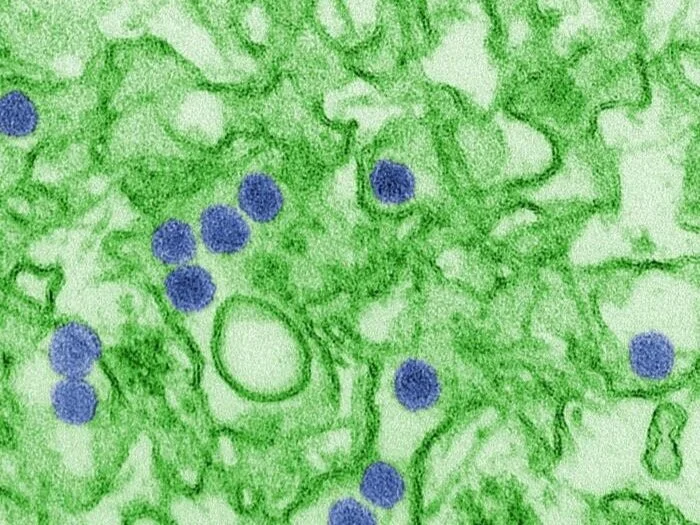
Spend a few minutes on LinkedIn, browse your emails or just wait for the phone to ring – there’s a lot of UV lamps for sale that claim to kill the virus. There’s also a lot of disinformation, confusion and very bad advice available. I’m going to try to cut through the clutter and summarise where LED lighting can and can’t help in disease control.
First a big DISCLAIMER, I’m an engineer, not a medical expert and I claim no special expertise. This post is a summary of what we know at Bright Green Technology, what we have researched and the input of suppliers and customers. Please do your own research or talk to an expert before implementing anything that you don’t fully understand and no responsibility or liability is accepted by us.
There are two distinct light technologies which can contribute to disease management and control – blue light and UV light. Blue light is in the visible spectrum, UV is not visible to the human eye.
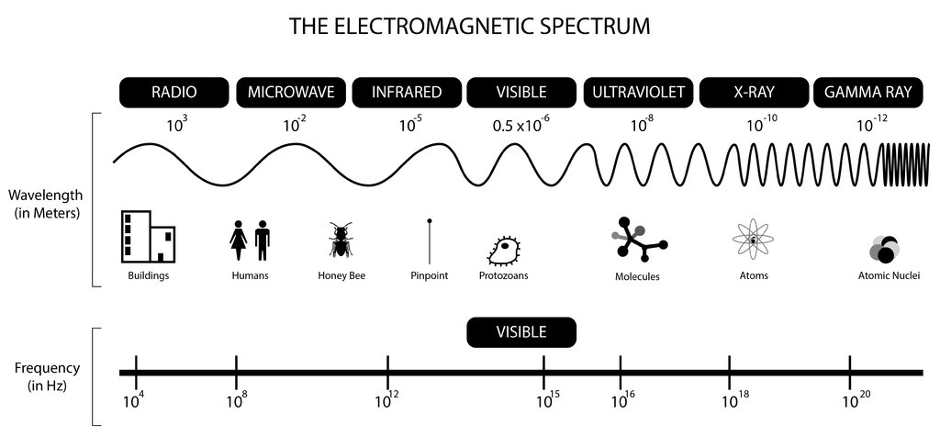
In both cases, I will focus on LED versions of this technology although there are conventional forms available that may be more appropriate or lower cost.
Blue light
Blue light is useful in only very specific wavelengths – the range from 400-470nm. Blue LED light with a wavelength of 405nm has been a focus of research and there is plenty of evidence that demonstrates the effectiveness of lighting systems for continuous decontamination of air and exposed surfaces.
Blue light kills bacteria, it does NOT kill viruses. It’s not clear (especially to me!) what the mechanism behind this is but it’s related to cells being photo-excited and producing toxic oxygen compounds. These compounds kill the bacterial cell. Typical reductions in cell count are 60-90% and there is evidence that blue light is effective against multi-drug resistant organisms as well.
The impact of blue light is also related to the energy incident on the target surface and the exposure time. Higher energies and longer exposure times increase the performance of the system.
Blue LEDs with the right output wavelength are available and can be worked with in the same way as any LED. PCBs, luminaires, custom products and conventional control systems can all be used to develop a useful product. Blue LEDs are also highly efficient in transforming energy to light, available in multiple product forms and relatively inexpensive.
Unlike UV light, blue light is not considered harmful to human/mammal tissue. Normal safe design considerations apply as they do for any LED system.
Finally, blue light at 405nm isn’t particularly pleasant so, in an architectural or retail setting, it’s a good idea to turn it on when nobody is looking. This could be at night or driven by a sensor – think of it as cleaning procedure that’s done after hours or during downtime.
In summary, to deploy blue light against bacteria:
Use blue LEDs at 405nm
Establish the light energy needed at the target surface (in W/m2) and design accordingly
Use a control system to turn off the light when there are users present
UV light
UV light can kill viruses along with bacteria. The market for UV LEDs is growing quickly, with a recent surge in interest due to their disease control potential in the battle against COVID-19.
UV can be divided into three primary sub-bands: UVA (315-400 nm), UVB (280-315 nm) and UVC (180-280 nm). There is also a category known as vacuum or extreme UV, with a wavelength of 100-180 nm – this is blocked by air.
The three sub-bands of UV light are used for different applications. UVA and UVB in applications such as medical imaging of cells, UV curing, DNA sequencing and detection of food contamination. UVC LEDs (particularly at 264nm wavelength) are highly effective at disinfection and they are already widely used in disinfection of surfaces, sterilisation, DNA analysis and fluorochemistry.
UV light works against living tissue at a more fundamental level than blue light. Absorbing UV photons destroys DNA and makes it impossible for the pathogen to replicate. It is an impressive killer of germs, viruses, and bacteria. This applies to human tissue as well and there is a significant risk to consider when designing and deploying UV systems.
LEDs are not the only source of UV light, mercury containing lamps are much cheaper, just as effective and can be a better choice. LEDs are best used in niche applications where space is limited or electronic control is needed.
So, UV light is highly damaging to living tissue and can be used to kill bacteria and viruses:
Use UVC light at 264nm wavelength
Avoid all human exposure
Choose UV LEDs where their characteristics justify the additional cost
Summary
There are two different approaches to using light in disease control and they have different applications.
Blue light is a cheap, highly effective and energy efficient way to kill bacteria. Blue LEDs are available and can be designed easily. There is no enhanced human risk.
UV light is more limited in application but incredibly effective at killing viruses. However, it is expensive, inefficient and hazardous to humans. Used carefully, UV technology has great potential and is already widely used in controlled conditions.
As I said, I am not a medical expert but do know about LED systems – so if you’d like to explore blue or UV products or systems, so contact me if you would like to chat this aspect through.
Contributor : Andy Clark
Andy is CEO of Bright Green Technology and Co-Founder of Bright Green Connect
Andy’s Linked In profile : linkedin.com/in/andy-clark-712a018