
Technical Textiles.
The standard product base selection in coatings weave and features are critical with technical applications.
Textiles in technical print applications.
Overview
In digital textile printing, asking the right questions can be the difference between a successful first-run project and a dumpster full of attempts. Navigating types of fabrics and constructions for different applications can get complex, but it is necessary for ultimately selecting the optimal fabric for an application. When evaluating fabrics, an important factor is knowing the difference between the two methods for producing cloth: knitting and weaving.
Knitting
Knitting uses one set of yarn to form loops that interlock. Rows of loops are caught into the previous row to construct a somewhat elastic fabric, compared to the tightly twisted yarns used in weaving. There are two types of knitting: circular and warp with print based fabrics for soft signage being predominantly warp knitted.
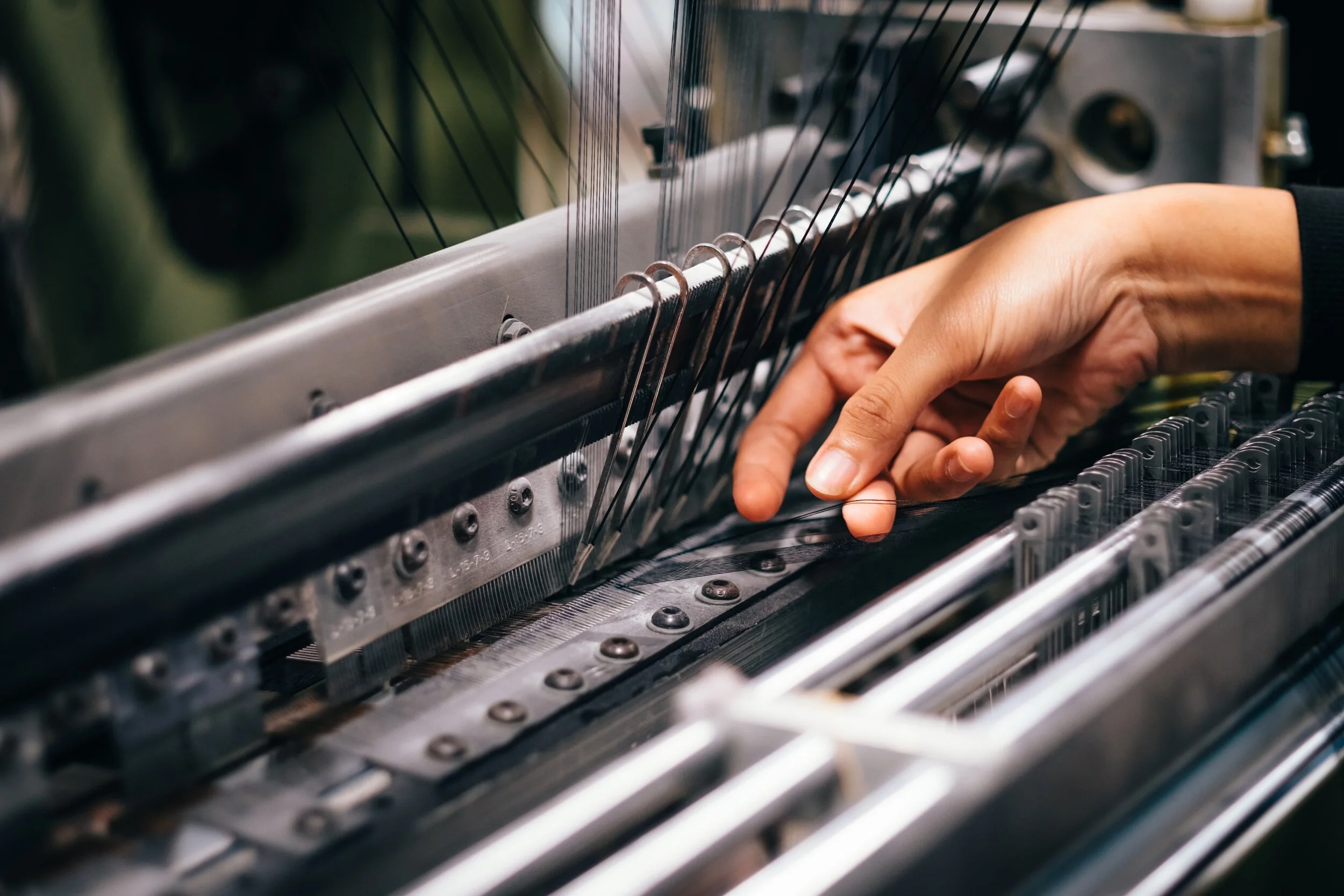
Warp knitting requires a chain loom in which yarns typically run lengthwise. The yarns are set up as warps on beams, and one or more yarns run through individual needles.
Warp knits create a tighter knit construction than most circular knit fabrics and often have up to four times as many stitches per inch. Warp knits are produced with a locking stitch, which increases the fabric’s abrasion and tear resistance. If a warp knit tears, the fabric will lock, unlike a woven, which will rip.
In soft signage, warp knits are the superior fabric choice because they offer dimensional stability, are easier to install into SEG frames, and do not fray.
Some examples of warp knit constructions are mesh, satin and flag. Warp knits for apparel are typically printed with dye sublimation or direct digital pigment printers, while warp knits for soft signage can be printed by almost every print platform, if the fabric is properly coated (optimised) for the ink set.
Weaving
Woven fabrics are made on a loom by interlacing two sets of yarns — the warp and the fill — at right angles to each other. Woven fabrics are used in the apparel, home furnishings and soft signage markets.
It’s important to note that using woven fabric for soft signage applications creates an additional set of challenges, including fraying and diagonal twill lines that can cause the graphic to look pixelated or blurry.
Woven fabrics are compatible with all print platforms if the fabric is properly coated (optimised) for the ink set.
Click below to return to main resource menu